England’s Euro hype begins
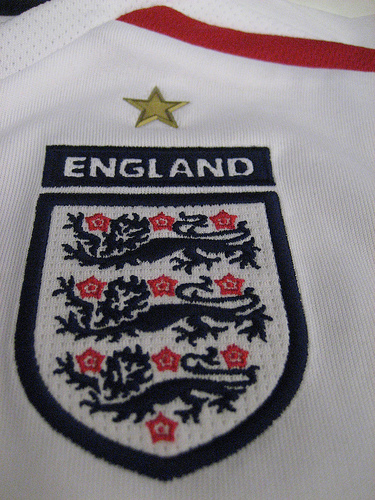
The hype begins, but England's deficiencies remain
After one good week for English clubs and players in the UEFA Champions League, former England captain Terry Butcher delivered this gem in his Daily Mirror column:
Young kids need to develop at international level and along with some of the veterans still available, the England manager should be able to mould this group of players into one of the best balanced England sides for ages.
As long as Capello is strict and firm with the pruning then the new shoots should blossom into making England strong Euro 2012 contenders.
I stand by my belief that England will continue to struggle without a winter break, but on another point, how can we continue to believe the hype that surrounds the England team whilst data has shown youngsters abroad enjoy nearly 60% more contact hours with elite clubs, and at some stages nearly double the time of young Englishmen. Despite the obvious talent of Jack Wilshere, most English players are already handicapped by the time they reach international level, and struggle to compete technically with foreign players.
Jamie Redknapp’s tactical blunder
 Writing in his Sky Sports blog, Jamie Redknapp gave his views on Arsenal and Tottenham’s outstanding Champions League victories in the week. The Arsenal-Barcelona tie in particular aroused a great deal of pre-match discussion as to how the Gunners should approach the game, and Redknapp reveals his thoughts on Arsenal’s tactics.
I have to say I didn’t think Arsenal would lose on Wednesday but you still have to congratulate them on winning that game.
So far so good Jamie, even if you are blowing your own vuvuzela a little.
The myth that is Mancini’s negativity

Mancini: Pondering the use of 8 defenders?
It’s a strange notion that a team, lying third in the table, can be “too negative” to win the league title. Rather than shortcomings of ability or mental strength, pundits have sought to cite Manchester City’s, and in particular manager Roberto Mancini’s, negative tactics as the reason they won’t be crowned league champions in May.
Saying a team is “too negative” is odd because it implies there is a correct approach to tactics. Of course the extremes, such as keeping all your players on your goal line or in the opposition penalty box (which normally leads to ‘quit game’ on Football Manager), are not particular clever or effective, but then again no manager would ever reach anywhere near the top levels of the game employing such policies.
The accusation is mainly levelled at Man City in big matches, where fans and pundits have grown frustrated at 0-0 draws this season away at Spurs and Arsenal and at home to Man United.
International friendlies are still important
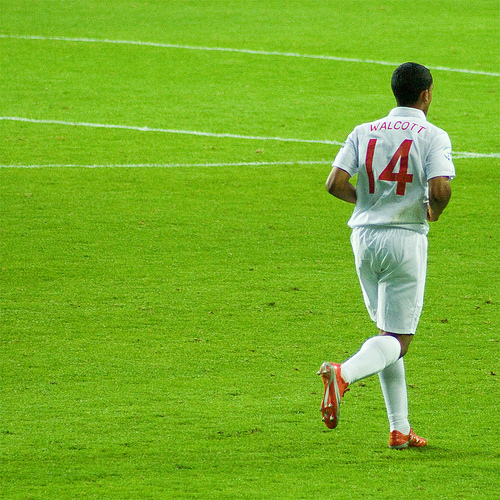
Walcott has a chance to impress for England (Elicar)
As England prepare to take on Denmark in Copenhagen on Wednesday, many fans of English football are bemoaning the timing of the international break. Perhaps it’s because we’ve just enjoyed a weekend of 43 goals, or that Champions League fixtures are only a week away. Either way, the general sentiment, as shown by this Daily Mail messageboard, is one of discontent.
The first comment highlights the general ignorance towards the break:
they are a total waste of time and its just another excuse for th[e] FA to rip of the fans
Lucas Leiva: Brazilian after all
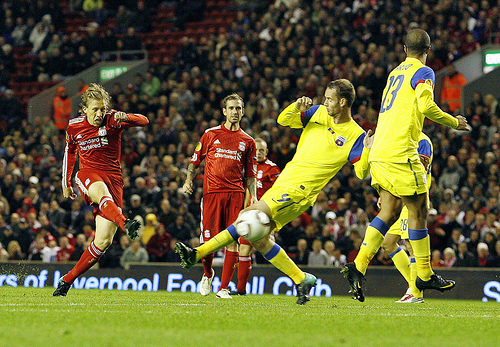
Lucas is enjoying a purple patch at Liverpool (AFP Photo / Mark Robinson)
Since signing for Liverpool in July 2007, Lucas Leiva’s name has been synonymous with mediocrity, a shining example of Rafael Benitez’s supposedly poor record in the transfer market.
Here was a player who evidently couldn’t hack it in the Premier League, unable to cope with the pace and power of England’s top division. Struggling with the ‘can’t perform on a warm Saturday in August let alone a cold Wednesday in February’ syndrome. Lucas was heavily criticised in the media, dubbed ‘Matt Lucas’ by 606’s Robbie Savage (which only he, presumably, found amusing), and provided a source of frustration for Liverpool fans, some of whom vented their anger towards the Brazilian in uninspiring Anfield displays.
Howard Webb: Manchester United’s 12th Man?
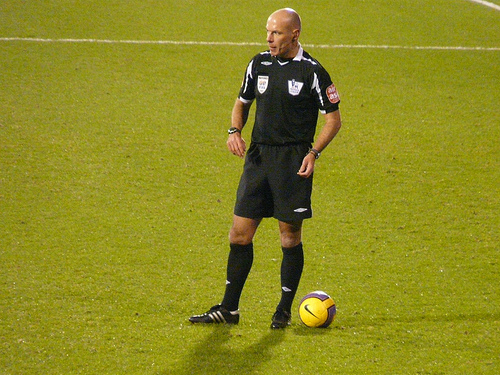
Howard Webb: favours Manchester United?
Given his achievements in the game, Howard Webb is easily England’s most accomplished referee. It’s a fact that grinds with fans of many Premier League clubs, who don’t feel he warrants the praise he receives. It’s safe to assume Webb divides opinion; he commands the respect of his peers, but often frustrates fans with some of his decisions.
One of the biggest accusations levelled against Howard Webb in recent years is a perceived bias towards ‘bigger clubs’, chiefly Manchester United.
This post aims to look at this belief, which although is mostly held by fans, is also perhaps held by players too, as Ryan Babel’s infamous tweet showed.
Torres & Carroll: transfers with more than meets the eye
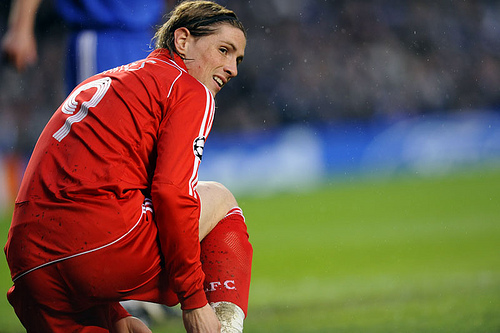
Torres: worth £50m?
In Why England Lose (or Soccernomics outside the UK), authors Simon Kuper and Stefan Szymanski make the humorous claim that “anyone who spends any time inside football soon discovers that just as oil is part of the oil business, stupidity is part of the football business.”
This was perhaps never truer than on Monday’s transfer deadline, where the Premier League indulged in a day of madness, illogic and most of all exorbitant spending. Torres’ departure from Merseyside for £50m to Chelsea allowed Liverpool to hedge £35m worth of their bets on Andy Carroll, a man with one international cap to his name. As a sideshow, Harry Redknapp approached the transfer market with a scattergun tactic that hoped to tempt a striker, any striker, to the club, preferably from La Liga.
Did Blackpool break Premier League rules?

Blackpool fell to Aston Villa without their "full strength team" (Shaun Botterill/Getty Images Europe)
In the past week, Blackpool have been fined £25,000 for fielding a weakened team against Aston Villa on 10 November last year. Blackpool became the second club in the space of a year to receive punishment for the offence, and the fine has caused much displeasure from both Blackpool manager Ian Holloway and the wider footballing community.
Blackpool were deemed to have broken Premier League Rule E.20, which states:
E.20. In every League Match each participating Club shall field a full strength team.
How much do the big matches matter: Momentum
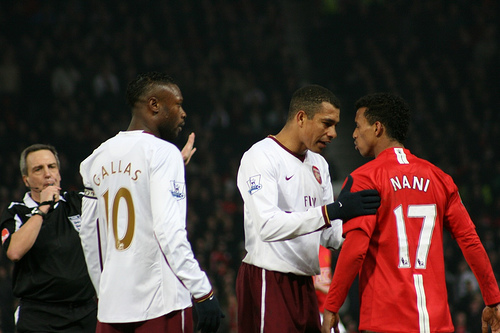
Man Utd v Arsenal: an age-old battle for momentum (gordonflood.com)
My first look at matches between Premier League title contenders attempted to take an objective, numbers-based approach to the analysis, but this raised one or two questions from Dom and Jamie, which I was keen to address.
Principally, the analysis by numbers failed to take into account the momentum or ‘belief’ gained or lost in big matches, which would have a knock on effect in matches against weaker opposition. Take Manchester United in 2008-09 for example; their shock 4-1 loss at home to Liverpool triggered a second defeat at Fulham a week later. My original analysis failed to consider the Fulham result as a direct cause of the Liverpool result, rather taking the Fulham game as an independent result in the normalised league table. It’s conceivable that had United drawn or beaten Liverpool, the Fulham result may have been entirely different.
Read more…
How much do the big matches matter?
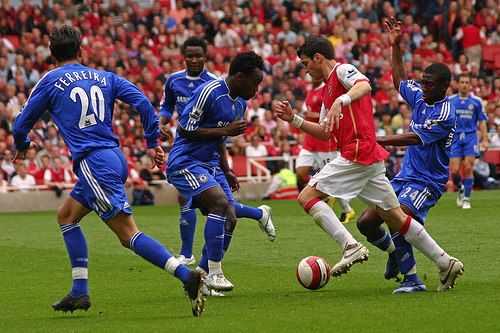
Arsenal v Chelsea: a big deal? (Ronnie Macdonald)
“Win when you’re not playing well: that’s a sign of champions.”
“It’s grinding out results at difficult places like Stoke, Bolton or Blackburn that wins you titles.”
“These are the games that matter: if they lose to their title rival, they can wave goodbye to being champions.”
Evidently, a combination of results wins teams titles. However, it’s worth looking at results between title rivals to see the true importance of these games. Primarily, does the team that wins the ‘league’ between title contenders go on to win the league title, and what conclusions can we draw from ignoring these results in the final standings?
Read more…

 5 Added Minutes