The Europa League and the Thursday night effect

Liverpool are one of three Premier League teams playing in the Europa League this season
“The Europa League takes an even bigger toll [than the Champions League] in my opinion, that’s the problem,” said Harry Redknapp in April 2011. “That Thursday night one, every week, and playing Sundays every week.”
It’s hard not to see his point; almost all teams involved in the Europa League get two days rest between their European match and domestic league fixture. Champions League teams may get up to four or even five days.
But do the supposed disadvantages hold true in reality? I’ve looked at how teams playing on Thursday nights in the UEFA Cup and Europa League have performed relative to expectations on the following Sunday.
Understanding UEFA’s incentives
Understanding UEFA’s incentives can help change decision-making (Image: Flickr/ahunziker)
Two of the criticisms UEFA has endured during the European Championship – particularly in England – is an apparent soft stance of racism, and a lack of care for fans.
The argument for the former was strengthened by the €100,000 fine handed to Niklas Bendtner for displaying underpants bearing the name of an Irish bookmaker. This is compared to fines three to four times smaller for racist abuse.
End of Season Review: Relegation
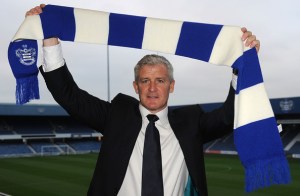
Neil Warnock may have been unjustly sacked, but QPR exceeded expectations under Mark Hughes
For most of the season, Blackburn, Bolton, QPR, Wigan and Wolves were the teams most notably attempting to avoid relegation to the Championship. It’s often hard to assess the performance of teams near the bottom, but the Euro Club Index provides some context on each club’s results.
All five clubs must have considered changing managers at some point during the season, but only two deemed it necessary, to differing effects.
End of Season Review: Penalty Misses

Luis Suarez misses an early-season penalty for Liverpool
One of the more noticeable early-season trends in the Premier League this year was the startling amount of missed penalties. By early October, only 11 of 22 kicks had been scored, a conversion rate so low that it led the Mail to ask why half of Premier League penalties this season have been missed.
The article suggests one or two theories – namely changes in laws for goalkeepers and more information on kickers – but provides no concrete answers. After all, twenty-two kicks is a very small sample size.
End of Season Review: Expectations Table
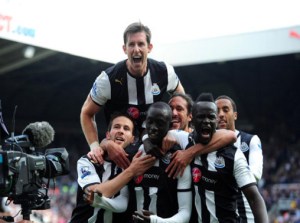
Only Manchester City overachieved more than fifth-placed Newcastle United this season.
At the start of the season, the Euro Club Index predicted the finals standings of the Premier League. Manchester United were made favourites, with a 50% chance of winning the league. The ECI expected them to get 86 points.
United’s closest contenders were expected to be Chelsea (20% chance of winning the league), with Arsenal (8%) and Manchester City (6%) a bit further behind.
Messi vs. Ronaldo: a goal-scoring comparison
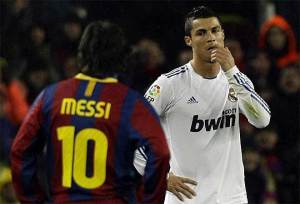
Do either Messi or Ronaldo excel in scoring important goals?
With Cristiano Ronaldo and Lionel Messi both scoring their 41st goals of the season to break the La Liga all-time record, it seems like no better time to reflect on their remarkable records, even if the major honours are yet to be distributed this campaign.
The two men have scored goals relentlessly since Ronaldo’s arrival in Spain for the start of the 2009/10 season; Messi has 106 to his name, Ronaldo one more with 107.
The distribution of their goals has been notably similar too in the past three seasons. Both have scored 35 goals to give their teams the lead in games, while Ronaldo has marginally more goals as equalisers and for two-goal cushions.
The not-so-dangerous 2-0 lead

QPR beat Liverpool from 2-0 down - an exception to the rule
Some might argue Liverpool’s capitulation at Queen’s Park Rangers last month was the perfect example of 2-0 being a dangerous lead. Cruising against a side battling relegation, Liverpool’s complacency turned into anxiety and then panic as QPR scored three in thirteen minutes to win the game.
Yet this was the first time Liverpool had dropped points from a 2-0 lead in nine and a half years, and their first defeat from such a position since November 2000. Two-nil hasn’t been a dangerous lead for the Reds at all in the Premier League; indeed it’s been quite the opposite.
How costly are missed penalties?
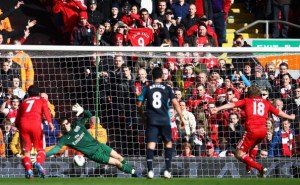
Dirk Kuyt misses his second penalty of the season for Liverpool
The current Premier League season has been partly characterised by a remarkable number of unconverted penalties. Of the 83 taken in 29 rounds of matches, 25 have failed to beat the goalkeeper.
This equates to a conversion rate of 69.9%, below the historical Premier League average of around 77%. We may finish the season back on average, but I thought I’d look at who has paid the price for missed penalties so far.
Wayne Rooney’s worth in goals
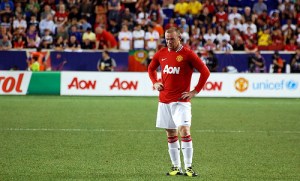
Rooney's goals have been less valuable this season (Image: Flickr/Joscarfas)
Not all goals are the same, this much we know as football fans. Man United’s fifth goal against Wolves on the weekend, for example, clearly has less value than Ryan Giggs’ late winner at Norwich last month.
Soccer Statistically has provided a way of quantifying the value of goals through an outcome probability calculator. By inputting a scenario from any given match, we can evaluate the effect of a goal on win, draw and loss probabilities, based on previous Premier League matches.
How important is the first goal?

How many points can you expect from scoring first in the Premier League? (Image: Flickr/gordon2208)
One of the biggest problems I’ve experienced in evaluating the effect of performance variables on success is that it is difficult to establish how much these factors are truly influencing results.
For example, if there is a relationship between pass accuracy and winning, we might conclude that teams who pass well are more likely to win. But ask yourself this: if a team is winning, does that give the players more confidence to pass the ball better?
However, if there is a relationship between pass completion and scoring the first goal, it’s easier to suggest there’s a causal effect, particularly if we assume “goals change games”. First though, we need to determine how important the first goal is on the final result of a match. Infostrada Sports have provided me with the data to investigate.

 5 Added Minutes