
Arsenal enjoyed 74% possession at West Brom, but still couldn't win
A pre-season draw to concede the Emirates Cup to the New York Red Bulls suggested that although it’s a new season for Arsenal, the same old problems remain.
In an attempt to get to the statistical core of those problems, I stumbled across a slightly bizarre relationship: last season the Gunners enjoyed more success when they actually saw less of the ball.
Eastern Euro-trips shouldn’t worry England
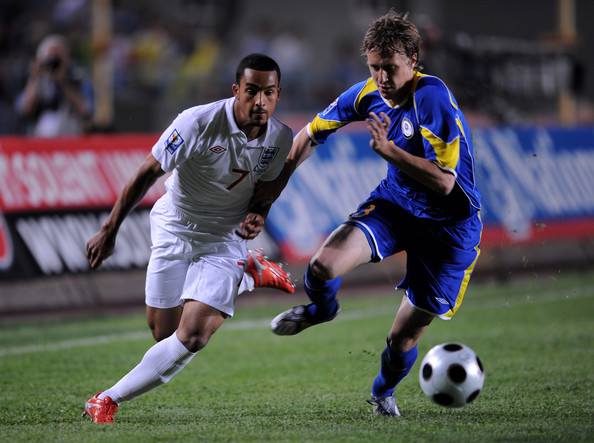
Trips to Eastern Europe have left England largely untroubled
Despite the overwhelming pessimism surrounding the England team, the general feeling is that Fabio Capello’s successor has been handed a relatively straightforward qualifying group for the 2014 World Cup.
If there is one concern, it is that England will travel four times to Eastern Europe, described as “tricky away games” by Rio Ferdinand on Twitter.

Unsurprisingly, Fulham's July Europa League qualifiers have been sparsely attended (Image: Flickr, nicksarebi)
Fulham’s early start to the new season was a reminder of the indifference of English clubs towards the Europa League, as Craven Cottage was a little over half full for early July qualifiers.
England’s snobbery towards UEFA’s second-tier competition is well-known, but has it always been this way?
Personal memory suggests the UEFA Cup or Europa League stigma is a relatively recent phenomenon. But how recent?
The worth of Charlie Adam’s set piece creation
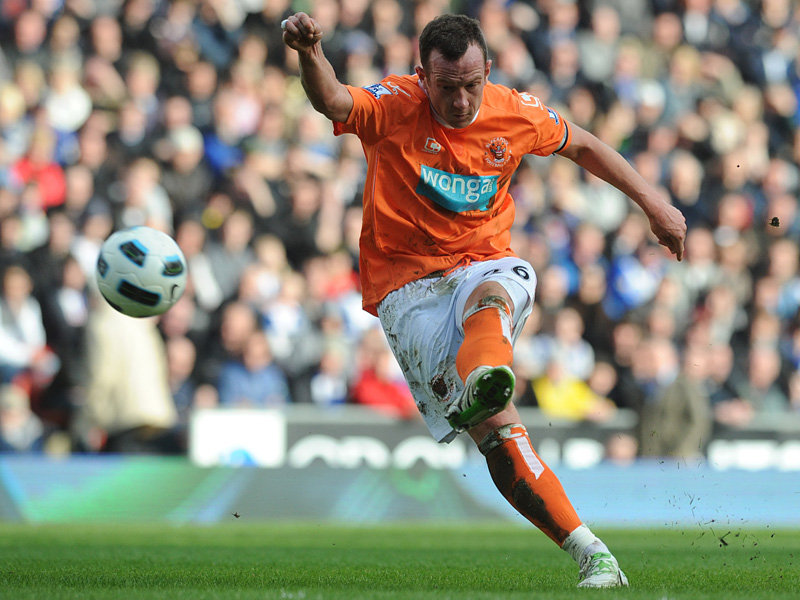
Will Charlie Adam's set piece ability aid Liverpool's Champions League bid?
Last month’s piece on the value of chance creation over the course of a season showed that there is some logic behind Liverpool’s decision to respectively sign and target Jordan Henderson and Stewart Downing.
Does the rationale extend to Charlie Adam, the Reds’ latest purchase? Although creating a healthy 64 chances in the league last season (Downing 85, Henderson 82), 45% of these came from set pieces (Downing 31%, Henderson 40%).
Is creating chances the way to the top?

Can Henderson be Liverpool's creative force? (Image: Flickr, vagueonthehow)
Much has been made of the apparent inflated price Liverpool have paid for Jordan Henderson, believed to be in the region of £16m.
Let us step away from the price tag for a moment, particularly as he has yet to kick a ball for his new club club, and consider the most telling statistic about Henderson’s 2010/11 season, that of his chance creation (tweets from OptaJoe here and here):
Measuring the Premier League’s competitiveness
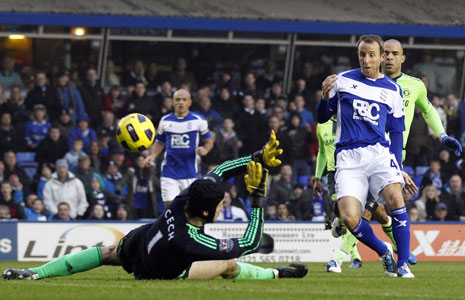
Birmingham defeated Chelsea in November - a sign of the Premier League's increased competitiveness?
A quick glance at the top of the league table after 38 games could easily be interpreted as the “same old story”. The three richest clubs in the land occupy the top three league places, whilst the top two spots are held by teams who have shared the previous seven titles.
Observers of the league will know it’s not been that straightforward. The division has rebranded itself as the most competitive and therefore most exciting league in the world, following a string of unpredictable results throughout the season.
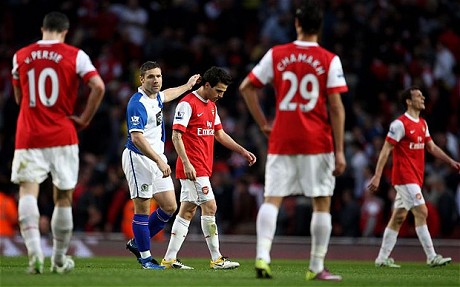
Did Arsenal drop points against sides like Blackburn because of Premier League scheduling?
In March, I studied the impact of unaligned Premier League kick offs for title contenders. It came off the back of a suggestion from Arsene Wenger to make the final rounds of Premier League matches kick off simultaneously.
I would recommend reading that piece before continuing (click here), though it’s not a prerequisite, since I cover the main findings below.
Directness still key to Coyle’s Bolton
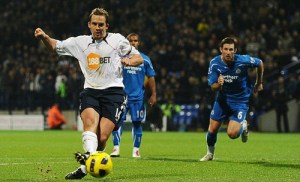
Owen Coyle's Bolton have not been afraid to use the height and power of Kevin Davies (Laurence Griffiths/Getty Images)
Bolton Wanderers’ form this season has seen them occupy Champions League places in the league and reach an FA Cup semi final, a fantastic achievement.
Much of their success has been attributed to Owen Coyle, who, after joining the club in January 2010, has won many admirers for his style of football.
Never fear, third-placed Championship team
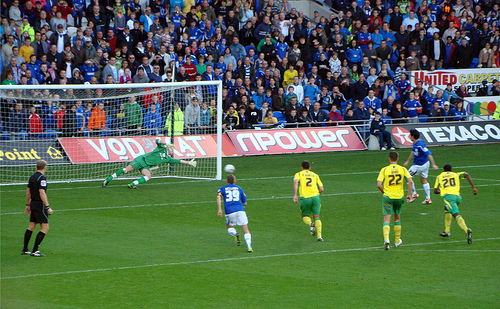
Cardiff and Norwich are vying for automatic promotion this season (Flickr: joncandy)
Perhaps the biggest myth perpetuated about Championship football is that the third-placed team in the division generally struggles to earn promotion through the play-offs.
The theory goes that having gone through the emotional turmoil of missing out on automatic promotion to the Premier League, teams aren’t in the correct frame of mind to tackle the end-of-season mini-tournament.

El Clásico generates excitement across the world, but is played when many fans across the world are asleep (Flickr: Catatan Bola)
The debate over which country boasts the best league in the world has not so much raged as meandered over recent seasons, with few agreeing with what exactly defines ‘best’.
Paul Merson briefly gives his thoughts in recent Sky Sports preview on what makes the Premier League his choice:

 5 Added Minutes